
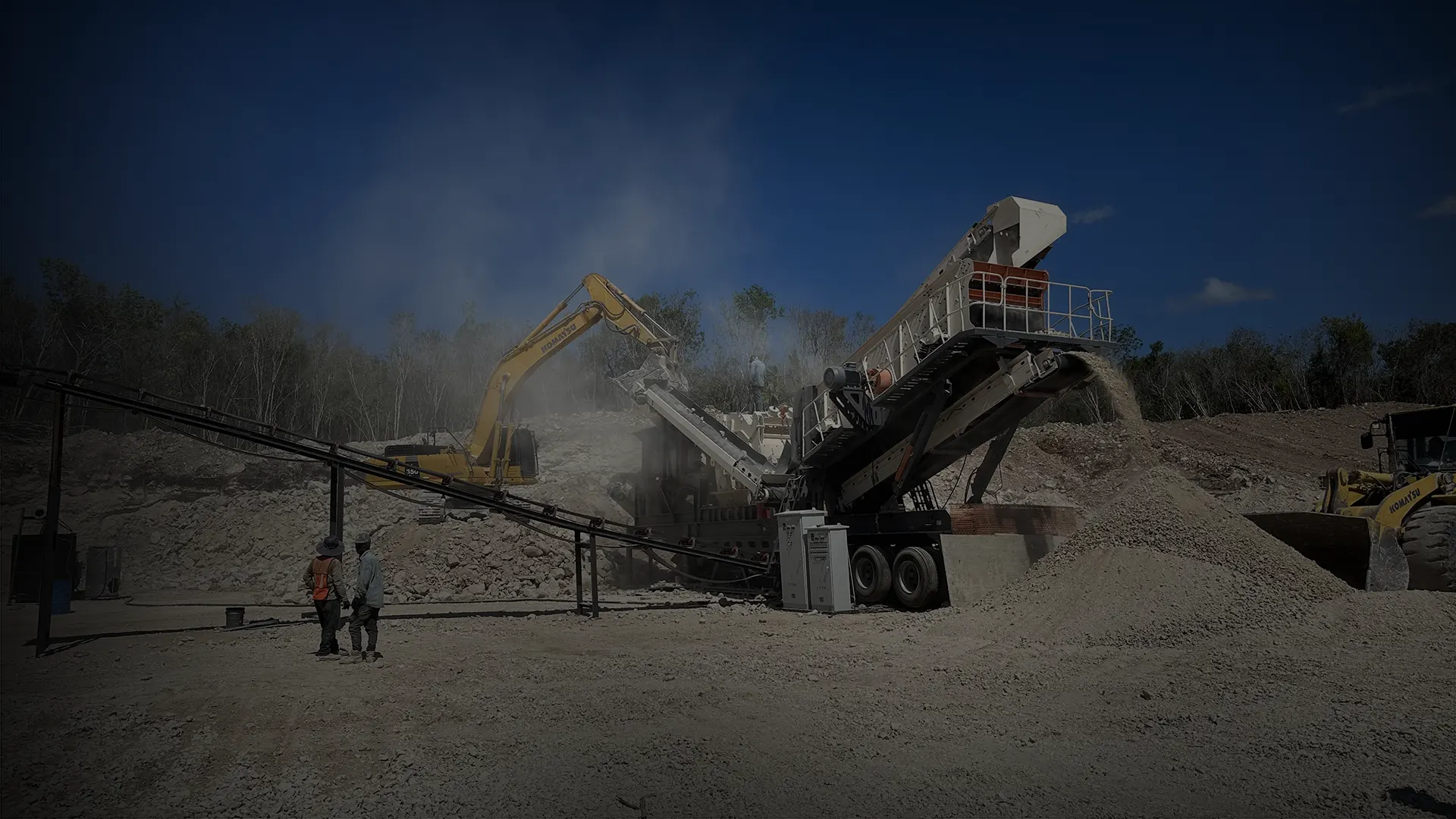
Project Introduction: This sand making production line is suitable for applications in hydropower, building materials, highways, and urban construction industries. It can be used for aggregate and artificial sand making operations from various materials such as hard limestone, granite, basalt, river pebbles, and slag. It is particularly suitable for special construction fields such as producing highway surface materials, high-grade road surface aggregate, high-speed railway passenger line aggregate, hydropower station aggregate, port and dock aggregate, and airport runway aggregate.
Process Flow of Sand and Gravel Production Lines with Different Outputs
Process Flow Introduction: A limestone sand making equipment with a capacity of 300-350 tons per hour. Stone material is blasted down from the mountain and fed into a vibrating feeder via dump trucks. Stone smaller than 750mm is evenly fed into a jaw crusher. The jaw crusher performs the first stage of crushing, producing stone approximately 95mm-165mm in size. This is then conveyed by a belt conveyor to an impact crusher for the second stage of crushing. Material larger than 40mm is returned to the impact crusher for re-crushing via a circular vibrating screen. Stone smaller than 40mm is fed into the sand making machine. Finally, the material is graded and screened by a circular vibrating screen. Material larger than the finished product is returned to the sand making machine for re-crushing. The finished product is conveyed to the finished product area by a belt conveyor.
Note: When the feed size is 40mm-300mm, the material directly enters the European-style impact crusher for crushing, bypassing the first stage of crushing. When the material is smaller than 40mm, it directly enters the sand making machine for crushing, bypassing both the first and second stages of crushing.
200-250 tons/hour granite sand production line
This 200-250 ton/hour river pebble sand production line uses a dump truck to feed stones smaller than 210mm into a vibrating feeder. The vibrating feeder evenly feeds the stones into a CS effective spring cone crusher. After the cone crusher performs the first stage of crushing, stones larger than 40mm are returned to the cone crusher for further crushing via a circular vibrating screen. Stones smaller than 40mm are fed into the sand making machine. Finally, the finished product is graded and screened by a circular vibrating screen and then conveyed to the finished product area by a belt conveyor.
Note: When the material is smaller than 40mm, it directly enters the sand making machine for crushing, bypassing the first stage of crushing.
Limestone Sand Making Production Line with a Capacity of 150-200 Tons per Hour
This 150-200 ton/hour limestone sand making equipment operates by blasting stone from the mountain. Stone smaller than 630mm is fed into a vibrating feeder via dump trucks. The vibrating feeder evenly feeds the stone into a jaw crusher, which performs the first stage of crushing. The stone emerging from the jaw crusher, approximately 80mm-160mm in size, is then conveyed by a belt conveyor to a European-style impact crusher for the second stage of crushing. Stone larger than 40mm is returned to the impact crusher for further crushing via a circular vibrating screen, while stone smaller than 40mm is fed into the sand making machine. Finally, the finished product is graded and screened by a circular vibrating screen. Material larger than the finished product is returned to the sand making machine for further crushing, and the finished product is conveyed to the finished product area by a belt conveyor.
Note: When the feed size is 40mm-300mm, the material directly enters the European-style impact crusher for crushing, without the first stage of crushing. When the material is less than 40mm, it directly enters the sand making machine for crushing, without the first and second stages of crushing.